Slash

January 18th, 2008

I Dreamed I Was Onstage With KISS In My Maidenform Bra

January 18th, 2008

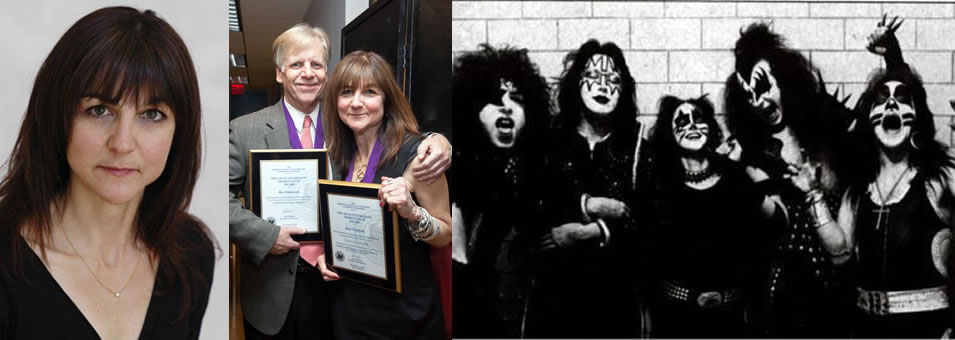
Well, not exactly my idea of the perfect fantasy, but I was curious about life on the other side of the foot-lights. Armed with an abundance of determination and a tight pair of Danskins (Danskins aren’t only for dancing), I approached Larry Harris, the vice president of Casablanca Records with my plan: “How about if I join KISS for a night?”  No answer, and then nervous laughter. Obviously, Larry thought I just wanted to know what it was like to mouth kiss a vampire. Sure, they were eager for a feature on the band but this scheme was just a little bizarre. I pushed the point and they told me disturbing tales of other fresh faced females who were transformed into raging teenage nymphs after attending a KISS concert. “But I don’t want to see the show, I want to be in it!” I persisted. Reluctantly the Casablanca crowd conceded (only after making me promise not to call KISS a glitter band), assuring me I could join these contorted Kewpie Dolls on stage for one number or four minutes, whatever came first, on the following Saturday. 
Thursday: I decided to drop in on the Detroit rehearsal to see what kind of atrocities I’d be in for. Soon after I arrived I found some of the band lounging on the side of the stage so I walked up and asked what they thought of the idea of me being a KISS (Kissette?) for a night. They all looked at me vacantly, and I realized that NO ONE HAD TOLD THEM!! I felt like a Rockette who gets told thanks at the open call before she’s had a chance to do her dance; but undaunted I fumed at the executive-in-residence, and demanded he explain the plan. 
I returned to an empty seat in the vacant hall and continued to watch the band rehearse, to “pick up some tips.” A stage hand divulged that bassist Gene Simmons had accidentally set his hair on fire while practicing the fire breathing segment of the show, which I admit made me squirm and fear for my own charred remains. My visions of stardom were quickly evaporating like warm Jell-O. During their break Simmons came over and pulled out the few strands of his singed curls, assuring me ”It was nothing,” but I couldn’t prevent myself from biting the Lilac Frost off my nails. I was beginning to have misgivings. I think Ace Frehley did too because he just stared over my left shoulder, but Peter raised a comradely drum stick when Paul Stanley stated as he pointed to the empty stage: “Saturday night, that’s you up there!” 
What am I going to pack to become a KISS? I ponder over breakfast, wincing at the memory of last night’s show. What if that geekish bass player bites my neck, oozing red blood-goo on my unsuspecting shoulder? Anxiety knots my stomach so much that I can’t even force a single Sugar Crisp down my throat, so I return upstairs to case my closet. One leotard—black, one pair tights—black, and one pair six-inch platforms—also black. I zipped up my Samsonite and hurried out the door, Juniors waning still ringing in my ear
Stage manager Junior Smalling is a frightening and humorless man, who wears and oversized pair of blue plastic glasses and possesses the self-given nickname of “Black Oak.” Last night he demanded my presence at the Eastern Airlines desk at 10:45 am. (for an 11:20 flight), and although it was now after eleven and my ticket was in order I still dared not move until Junior arrived. 11:10 he strode in lugging a battered briefcase and an ugly scowl. He didn’t acknowledge me, but instead barked at the airline clerk. Finished, he whirled on the band like and angry parent. “What the fuck is wrong with you guys? We get you watches, and you still can’t get here on time. We coulda missed the plane and the gig, so hustle them asses to the plane!” Finally, he looks down at me and spits: “What are you waiting for? Get to gate 34!” Then almost kindly he adds, “Didn’t anybody ever tell you to wear tall shoes around these guys?” 
Seated in 8A my fear of flying is mixing badly with my apprehension. After a round of Hail Mary’s I look up to see Gene Simmons seated next to me, sans makeup of course although he still makes a scene with his 7 inch platforms, cheese colored scarf and black polish that he is presently chipping off his stubby nails. Of all the members of the band, his appearance is the most obscured by the paint: he might just as easily be Omar Sharif or Joe Namath for that matter. Instead he was a former life guard, then a Boy Friday at Vogue, has a BA in Education but secretly confesses a desire to be Bela Lugosi (and is lovingly dubbed Mr. Monster by the rest of his fellow inmates). Circulating around the plane is the current issue of one of CREEM’s competitors, which has done a full feature on KISS. Eventually the copy drifts to our seat and Gene insists on reading the story aloud to me. 
“How come after everything I say, they always add ‘Gene expounds?’” He pouts.
“Probably because you went to college,” I explain.
We exit the plane without incident, except that most of us are over six-foot-something. Me, I feel a lot like Lewis Carroll’s Alice after drinking the small potion, until I notice that Paul Stanley isn’t that much loftier than me. As I remember, yesterday I came about eye level to his Keith Richard button. 
“What did you do, shrink overnight?” I asked
“No, didn’t you know I gave up platforms? I wanted a new look,” he says coquettishly, tossing back his head of perfect curls, but he blows the cool by dropping his screaming yellow zonker sunglasses. 
“Hollywood?” I venture. 
“No, I wear ‘em because I don’t like to see people looking at me all the time,” he confesses. Stanley is a confident young man, bordering on almost arrogant. With or without makeup he possesses and intense magnetism: Paul is the throb of the teenage heart, luring them away from their Barbie Dolls and into the backroom. 
Believe it or not, the Gorgeous George of the group was once an ugly duckling, never getting any of the girls he wanted. “You know, I was an ugly kid. I looked like I was put together with spare parts. ‘Okay Mac, here’s a set of legs, stick ‘em on Stanley.’ I used to be fat and had the funkiest hair. In fact, I even used to iron it, or use this Puerto Rican product called Perma Straight that had directions in both English and Spanish. Back in 1966, the only thing I wanted to be was John Sebastion. 
We enter Johnston, PA, in a rented Limo driven by a freckle-faced strawberry blonde. “You know, whenever we have a female limo driver I feel like saying, ‘You get in the back seat, and let me drive,’” says Paul. “Or just get in the back seat…” he jokes. The driver titters, throws a toothpaste smile, and continuously sneaks glances at him in her rear view mirror. 
“Is this your regular job?” he asks. 
“Yes.”
“What is your irregular job?” he jives. As we get out of the car she anxiously waits for Paul to beckon her, and when he doesn’t she reluctantly pulls away. 
“Paul, you’re just a tease,” I admonish. 
“Yeah, I know, that’s all the fun. Getting it is nothing.” 
“Room 421, Miss.” Key in hand, I rejoin the gang and anxiously ask, like and old hand, “When’s the sound check?” 
“What sound check? “ Gene blankly answers. 
“You mean I don’t get to rehearse?” I ask nervously.
“Nah, you’ll catch on, just follow us,” says Paul. 
“Yeah, but I’ve got nothing to wear…,” I say with a trace of panic. 
“Don’t worry, we’ll take care of you kid, your name in lights…” jokes Bill Aucoin, their manager. 
It’s 4:00 p.m., and all I have between me and showtime is Saturday afternoon TV. I’m watching Soul Train without having the slightest idea what I’m seeing, when the phone rings. 
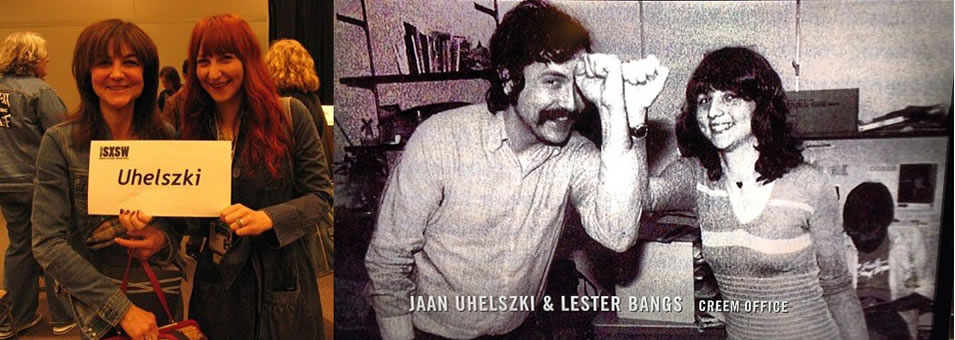
“Uhelszki?” (By this time I was one of the boys, and either called Uhelszki or kid.) 
“Yeah?”
“What size shoe do you wear?” 
“8 ½.. Why?”
“Too bad. I thought we could snaz you up in a pair of silver boots.” 
“Well, maybe I could stuff ‘em with Kleenex?” 
No, won’t work. Don’t worry, I’ll rummage around some more.” 
I felt like I was getting ready for that Big Date—you know, the prom or Homecoming—when actually I was going to be on stage for a total of four minutes in an Ice Arena in Nowhere, Pennsylvania. But still fidgety, I kept trying on my leotard over and over, checking the image in the mirror, and feeling a lot like motorcycle mole in Naked Under Leather. Drawing the drapes, I practiced a few classic KISS kicks in the bathroom mirror without much success. My practice was cut short by a knock at the door, and an ominous voice: “Be in the lobby in one hour!” The Voice commanded; mine, as a mere member of the shock troops, was but to obey. 
The dressing room in all of its filthy linoleum splendor wasn’t the worst of its lot. Once inside, I’m afflicted with a bad case of modesty, and become obsessed, like a cat searching for a spot to drop her kitten, with finding a secluded corner to change into my clothes. Would a phone booth do? Clutching my costume, I spot an empty stall and dart in relieved, bolting the door. Like a quick-change artist, I tear off my tee shirt, tug at my Landlubbers and don my basic black, feeling more like a naked seal than part of KISS. Timidly, I sneak out of the stall and approach Ace: “Hey, do you have another pair of tights I can wear? I am freezing,” I lie. 
“Yeah, but they’re size D,” says Ace.
“That’s okay.” 
“But Jaan, yours look better. They’re much hotter, because you can see through them. Doncha wanna look good in pictures?” 
“That’s what I was afraid of.” 
Hey, hey, if you don’t watch those legs they’re gonna get grabbed,” leers Simmons. 
Embarassed, I turn on Junior and shout: “Hey, how long until we go on!” 
“Lookit her, give her a black outfit, and make her a KISS and already she’s hard core,” he laughs. 


The first band is on and the crowd is a stiff. No encore. Bill Aucoin sticks his head into the dressing room, shoves five backstage passes towards us, and tells us we’ve got 45 minutes until showtime. My palms have started to sweat so much that they’re beginning to obliterate the lettering on my pass, so I stick it on my right shoe, figuring the local goon squad would never believe that I was “KISS For A Night” and give me the shove, figuring me to be just another fanatical KISS groupie who had painted her face like her heroes, which seems to be the current fashion among fans. In keeping with the code of concealing the real identity of KISS, my photographer can’t start shooting until the guys have sufficiently obscured their features. Tired of pacing, I take a spin around the backstage area, which is littered with underage glitter queens of vary8ing age and brilliance. A fourteen-year-old Patty Play Pal accosts me. 
“You know Gene Simmons?” she drools. 
“Yeah,” I reply matter-of-factly. 
“Does he really do those things with his tongue?” she asks excitedly 
“I guess so,” I reply
“Gee, I wash he’d use that tongue on me, “ she says wistfully. 
I return, and KISS are in the final stages of completion, and ready to give me tips on cosmetology. I’m hesitant to let them know that the last time I put on face make-up was in 10th grade, in the girls’ john at Southfield High School, and all my technique consisted of was smearing Touch and Glow over my adolescent visage. 
“Yeah, Uhelszki, you gotta get rid of those bangs!” barks Simmons, yanking two clumps of my hair and wrapping elastic bands around them, so my carefully bow-dried hair is imprisoned in two sprouts on the top of my head.” 
“Ouch,” I complain.
“Shuddup kid!” kids Simmons. 
“You’re the one who asked for this.” Suddenly Paul looks at Gene, and the two of them grin, nod their heads, and attack my hair with a rat-tail comb and a can of hairspray. “Ah, perfect,” sighs Paul, as he admires my new fright-wig concoction. 
By general consensus, KISS have decided to make me up as a composite of all of them, just like the back cover of the Hotter Than Hell album. Now for the actual transformation: Side straddling the bench, I face Simmons in his black satin prize fighter robe with Otto Heindel emblazoned on the back, trying g not to giggle as English comes out of this Halloween-monster thing. “It’s time to make a little monster. Now watch, so you can do this,” he instructs as if he were a counselor for the Elizabeth Arden School of Beauty. “First rub Stein’s clown white all over your face. Smooth it very lightly, only using a little around the eyes.” 
Gene etches Maybelline black on my dry to normal skin, sketching in his bat insignia. “Hey! Don’t make her up just like you,” yells Stanley. 
“I’m not, I told you, we each get a crack at her.” Ace splotches a silver dot on my nose, and Peter adds his own feline touch in messy black crayon. Paul pauses over the conglomeration, and draws a smaller version of his star. Funny, somehow, I fell some kind of immunity behind the paint, a little more confidence. Maybe this rock ‘n’ roll business won’t be so bad after all. Gene holds up a mirror and stands back, telling me to look at my reflection. “Don’t you feel special?” he inquires. 
“No, silly,” I admit. 
“Come on, you look very groupie.”
“I do not!” I argue. 
“No, that’s great! Get off on it tonight, while you got it,” he said 
“So then you think I look okay?” I ask.
“Yeah, but I look better!” he laughs.
Now the presentation of my plugless wonder. Junior shoves a red guitar in my hands and I fumble with it. “You mean you don’t even know how to hold a guitar?” he asks incredulously. 
“No, do you know how to change a typewriter ribbon?” I retort. Paul comes to my rescue and shows me how to handle the Fender. “Here, hold it like this, off to one side. Now wear it low and slinky, so it looks sexy.” 
My last touch is the freak paraphernalia, and I go from person to person collecting their junk jewelry and brutish decorations. Finally I was out fitted in a studded collar, a menagerie of plastic eyeballs (and other unidentified organs), rings, a metal cuff, and a studded belt whose buckle encase a tarantula named Freddy. Unfortunately Freddy kept slipping off my 35-inch hips, and finally had to be taped to my tights with gaffer’s tape. Readying for a gig with KISS fell short of my expectations and their reputations. I expected some gruesome ordeal, but instead we took turns mugging in the mirrors, exchanging gossip (“Did you see the set of tits on that 15 year old broad?”) and advice. I felt more like I was at a Tupperware party than in a rock ‘n’ roll dressing room, but then the “worst” was yet to come. Stage fright. “I got a run in my rights.” I whined.
“Don’t worry,” comforted Bill, “who’s going to notice 50 rows back?” Like a rock ‘n’ roll Casey Stengle, Bill gave me an impromptu pep talk about standing up straight, not watching the audience, and looking “like you belong there.” As he finished we were out the door, and believe it or not I was raring to go, running down the hallway. Without realizing it, I was halfway up the stairs to the stage when Junior grabbed me. “Hey sweetheart, where you going?” he laughed. 
What he didn’t realize was I was getting a little trigger happy, and maybe even stage struck, but just in case I motioned him over to me. “I have every intent on going through with this, but when it’s time for me to go onstage, don’t give me a hand sign, just shove.” 
The set seemed to take forever; I felt like I was sitting through the rock version of Gone with the Wind. I had already shredded four Kleenexes, I had to go to the bathroom, and the makeup was beginning to itch unbearably. As I raised on one fingernail to scratch, Bill Aucoin was at my side, like a trained pro, grabbing my hand. “That’s a no-no,” he said, and fanned my face to relieve the irritation. “Did you know you’re on next?” he inquired. 
I didn’t. Visions of graduation day floated through my head, that fear of slipping before the entire school before you got your hands on the diploma. Only difference was that if I slipped on stage, KISS would use it as part of the act. So this sense I couldn’t make a mistake. Just a damn fool of my self. 
Countdown. Then the shove and I’m on stage, moving like I’m unremotely controlled. Forgetting completely that I ‘m in front of 5,000 people participating as one fifth of this sadistic cheerleading squad, bobbing and gyrating in instictively, I no longer hear the music, just a noise and a beat. On cue I strut over to Simmons’ mike and lean into it and sing. Singing loud without hearing myself, oblivious to everything but those four other beings onstage. Gene whispers for me to “shake it” and I loosen up a little more, until I feel like a Vegas showgirl going to a go go. Suddenly it strikes me: I like this. And I venture a look at the crowd, that clamoring, hungry throng of bodies below me. All I can think at that moment is how much all those kids resemble an unleashed pit of snakes, their outstretched arms bobbin and nodding, as if charmed by the music. I wonder if they will pick up on the hoax? But they keep screaming and cheering, so I might just as well be Peter Criss, unleashed from his drum kit, as anyone. The only difference is, I am the only KISS with tits. 
I slide over to Stanley’s mike, sneaking up behind him, and mimic his calisthenics. He whirls around and catches me, emitting a huge red crimson laugh from his painted lips. I push my unplugged guitar to one side and do an aborted version of the bump and the bossa nova, singer into Paul’s mike this time. 
“I wanna rock and roll all night, and party every day! Oh, yeah! I wanna rock and roll all night, and party every day!” 
And right on cue, to add that last dash of drama, Junior’s beefy arms ceremoniously lift me and the guitar three feet off the stage, and I look like a furious fan who’s almost managed to fulfill her fantasy, but was foiled at the end. But you know something? I fell foiled: I wanted to finish the song. My song! 
We trekked back to the dressing room and now, after the ordeal, my legs went marshmallow. Wanting to appear blasé after my big debut, I grabbed a wooden chair and draped myself over it. 
“It was hysterical!” laughed Paul. “I knew you were gonna be on stage, but then I forgot about you, then all of a sudden I look and see you dancing, looking like Minnie Mouse.” 
“You’re a perfect stage personality,” said Gene. “All of a sudden you were hogging the mike. You took over, stealing scenes like a pro. You know, the kids thought you were part of the show. 
The party was over, the fans dispersed, but the five of us were armed with five boxes of Kleenex and four bottles of cold cream. “You know, if we don’t get rich, I gonna need a padded cell,” confesses Peter. 
The next morning, as we sleepily wandered to the coffee shop to await the limousines, each member of the group greeted me, not with a “Good morning,” but with a mimic of my stage shimmy. “You deserve it, Jaan. You told us you were shy. I never thought you could be such a ham,” explained Bill. 
As we said our good-byes, Gene Simmons said over his shoulder: “Whenever you feel like putting on that make-up again, give us a call.”  CREEM Article: January 1977. Reprinted from August 1975 issue. Author: Jaan Uhelszki Disclaimer: Published without permission. A reasonable attempt was made to contact the publisher. If in violation, please email me. 
CREEM Images: All pictures taken by Barry Levine, with the exception of the Boy Howdy Pick. Credited to Charles Auringer.

Kissed Off

January 18th, 2008

I am tempted to strangle Hallie Eisenberg with my Maidenform bra. She’s that insufferable 3-foot-10 spokes-midget for Pepsi with ratty hair and reprehensible manners, channeling Marlon Brando’s voice and threatening a hapless waiter who has the nerve to serve her Coke to quench her underage thirst instead of Pepsi.
Instead of snuffing her out at an early age, the folks at Pepsi-co thought she was so precocious that they signed her up as the “Pepsi Kid.” They’ve stuck her in a retro Orphan Annie getup and starred her in nine commercials for the soft drink with the likes of Ken Griffey Jr., Aretha Franklin, Faith Hill — and KISS. Which brings me to the strangling business. Much to my dismay, the almost 8-year-old actress wasn’t just featured in an advert with KISS; she dressed up exactly like the Kabuki Krusaders, sporting her own platform boots, rhinestone guitar and leather frock, and was made up to look like one of the band, just like I was, almost 25 years ago. 
Up until the commercial aired on this year’s Oscars, nobody had ever put on the Stein’s Clown White, the black leather, and joined the fire-breathing quartet on stage but me. And I assumed it was going to stay that way, especially now that the glam-rock hybrids had launched their farewell tour and were throwing in their wigs and white face after nearly 27 years in the saddle. But no, I had to find out on Entertainment Tonight that the execs at Pepsi’s ad agency were featuring Hallie in a 60-second commercial and she would wear KISS makeup and have her own custom-made guit
To say I was plotting revenge would be beneath me, but much to my shame, I called up the company’s headquarters in Newburgh, N.Y., and demanded to speak to Hallie. I was referred to her agent and had to explain for the third time that day that I wanted to interview her. But if truth were told, I wanted not only to harangue the tyke, but also to discover whose idea this was, and to find out if she got to plug in her guitar. 
Hallie’s agent cautioned me that I had to wait until her young charge was home from school before I called, so I did some yoga cleansing breaths. Needless to say, they weren’t working. ”She goes to school?” my poisoned thought balloons exploded. Fat chance. As I waited for the faux second grader to finish geography class, I began reminiscing about that cold Saturday in 1975, when I was momentarily let into the line-up. It was two years before the front lines of the KISS Army had even been a glint in Gene Simmons’ beady eyes, and the four guys, fresh from the streets of Queens, N.Y., were only just getting used to the feel of nylon tights and platform shoes.   I, on the other hand, was an editor at CREEM, a glossy rock publication that we had audacity to proclaim was “America’s Only Rock and Roll Magazine.” I was trying to convince KISS’ record label, Casablanca Records — so desperate for publicity for their masked rockers that they were even staging KISSing contests across the country to promote the band — that I would do an extensive story on their band. I called this story, “I Dreamt I Was Onstage with KISS in My Maidenform Bra,” after an ad pairing women in their underthings, waking up in unusual places. 
Much to my surprise, after little haggling, they agreed, only extracting a promise that I wouldn’t refer to the band as a glitter band. Easier said than done, but armed with my marching orders I got my battered black Samsonite from the top of the closet, and packed essentials — black tights, black underwear, good black shoes and makeup remover. I hopped an Eastern Airlines commuter plane to the small southwest Pennsylvania city of Johnstown. 
Battling frigid temperatures and near-crippling stage fright, and without the benefit of a rehearsal, I was semi-prepared to fool some of the people of Pennsylvania for about four brief minutes. But I’m getting a little ahead of myself. First I had to endure Gene, Paul, Ace and Peter savaging my hair and makeup, outfitting me in their neo-Goth finery and ridiculing my ignorance of cosmetology. “How come you don’t know anything about putting on makeup and you’re a chick?” asked Ace, advising me to smear on cocoa butter to seal my pores.
Gene etched Maybelline black eye pencil on my dry-to-normal skin, sketching in his bat insignia, until he was unceremoniously stopped. “Hey! Don’t make her up just like you,” complained Paul. The band was fiercely competitive, so each member got to indelicately “take a crack” at me, sketching his own symbol on my face, so my masque de gig would be a combo of theirs, like the back cover of Hotter than Hell. 
After the last line was filled in, I began to feel transformed. The thick makeup made me feel almost invulnerable, like a superhero, causing my innate shyness to miraculously melt away. As I paced back and forth in six-inch-high Charles Jourdan heels, the band’s manager gave a pep talk about standing up straight, not watching the audience and looking like I belong there. 
Then the road manager led us out into the dark tunnel that led to the stage area of this one-time Ice Arena. I trailed behind the other four, charged with adrenaline and bravado, and actually followed the band right up the stairs to the stage, almost forgetting that my part — “four minutes or one song, whichever came first” — wouldn’t come until the end of the set. 
“OK, you’re on!” the band’s road manager finally shouted, pushing me on stage. Unbelievable as it may seem, the 5,000-plus crowd of writhing teen-agers seemed to melt away and I felt instantly at ease on the two-foot-high stage. At once, I was taken over by the thundering bass and throbbing drums, and I began to bob and gyrate instinctively, holding my red Fender guitar (that they refused to plug in) “low and sexy” as Paul Stanley instructed. 
Once out under the lights, I dogged Paul’s every move, getting into the macabre calisthenics of the act. “I wanna rock and roll and party every day,” I shouted into the mic, realizing that the crowd had absolutely no idea who I was or, even worse, they didn’t even realize that there was an extra KISS member. I remember thinking the only difference is I was the only KISS member with breasts. And to tell you the truth, I’d always thought it would stay that way.  The next morning, after we said our hasty good-byes in the hotel coffee shop, Gene Simmons said over his shoulder, “Whenever you feel like putting on that makeup again, give us a call.” 
I never got around to making that call. Instead, the band called Hallie Eisenberg to put on the makeup in my stead. No, it gets worse. The little brat had a professional makeup artist who slaved over 3½ hours to get Hallie to look the part.   ”I got to choose what I wanted. But of course I chose the same thing everyone else did,” Eisenberg tells me between not-so-adorable hiccups, when I finally got her on the phone. No having to suffer looking like a wayward Picasso like I did. Eisenberg chose a smallish tasteful star and a single lightning bolt
“So you got to look like Paul and Ace,” I tell her. 
“Oh? I did? OK,” she says from her New Brunswick, N.J., home, where she lives with her mother, Amy, a former clown, and her 23-year-old brother, Jesse, who stars on the Get Real sitcom. 
Eisenberg, a Mariah Carey and Spice Girls fan, had never seen KISS or heard KISS or even owned a KISS record before she met them. While a source at Pepsi says the band members scared her because they were so tall, the actress demurs, and explains, “No, I wasn’t scared, but the first time everybody thought I was.” She insists, “When I got up there, they put earplugs on me, so I had a scared face because I was trying to read lips because I couldn’t hear anything.” Yeah, sure. 
Much to my delight, Hallie tells me that they didn’t plug in her guitar either, but she did get some guidance from the guys. “Gene Simmons showed me how they dance on stage, and showed me that thing he does with his tongue. Did you see me do that, too, at the end of the commercial?” 
As for the makeup, three days later she was still sporting the blue eye shadow, even though her mother doesn’t allow her to wear makeup yet. “I actually liked it,” she says. “I didn’t want to take it off.” 
Yeah, that’s what we all think in the beginning. Disclaimer: Published without permission. A reasonable attempt was made to contact the publisher. If in violation, please email me.   

Johnny Ramone

January 18th, 2008

In his ripped jeans, black leather jacket, and longish Beatle cut, Johnny Ramone guided the fortunes of the pioneering minimalist punk band he helped found on the suburban streets of Queens New York back in 1974. But on August 6, 1976, Ramone laid down his trademark Mosrite guitar one last time, after the Ramones played their final show at Hollywood Palace, and never once thought about picking it up again. But any second thoughts Ramone may have had were dashed, when Joey Ramone died of lymphoma on April 15, 2001, and Dee Dee Ramone succumbed to a drug overdose a year later. Despite those twin tragedies, the Ramones have had a curious afterlife, with Rhino Records re-releasing all of the band’s classic albums, two tribute albums hitting the market–one co-produced by Johnny Ramone, and a no-holds barred documentary “End of the Century” due out later this year. The usually reticent guitarist has finally agreed to come clean about much of the band’s notoriously dirty laundry, and attempts to show he’s really not an ogre and a control freak.
JU: When somebody like Pearl Jam says the seeds of their band come from the Ramones, do you go, what, you gotta be kidding??
JR: Yeah, yeah. I mean, you know, I mean I remember noticing it, the firsttime was back in the 80s, it must’ve been late 80s or around 1990, Skid Row did acover of a Ramones song, and they put it on their album, and they got a gold record,and all of a sudden they sent me a gold record. Skid Row! Odd, you know? But I do understand it. There would be influences in my life and we don’t sound nothing like them. So, doesn’t matter. With a lot of people, what happened was they saw the band andit made them want to start a band too.
JU: Because Eddy Vedder is a friend of yours, don’t you just say to him,”Hey, really, what was it?” Weren’t you more curious because he became a friend?
JR: Yeah, and I talk to him every day, and never ask him. I know he’s a bigfan of the Who, and I know he’s got a whole bunch of other stuff he really loves, andyou know, I see his tastes are in general different than mine.
JU: The Ramones tribute album was a really good mix of people. I mean do you seeany of them as the true descendents of the Ramones? Is there one band that you see?took the torch and ran with it?
JR: Maybe someone like Green Day and Offspring. In some ways Rancid, but they sound more like the Clash. I mean really the direct offspring would be the first punk movement from England like in ‘76 and ‘77, ‘78. That would be the first direct one. You know, because they bought our first album. They started bandsafter they heard the first album. You know? And these are the grandchildren, I think.
JU: Do you sometimes wish people didn’t know how old you are? That your history wasn’t out there for everyone to see?
JR: Well, I don’t care no more. In the 90s I started to feel like a dinosaur. We played some festivals with some of the other new bands, and I could see that now these bands are being influenced by Pearl Jam, and bands like that. That was all fine. But they didn’t even know who the Ramones were. And I started to feel, it was time to stop. When, now those bands influenced by the other bands, it’s so far down the line and they don’t even know who the hell we are.
JU: The Ramones were such a template for what became punk rock - the place where music took the left turn, becoming one the most important bands in the world.
JR: But the kids just don’t know who the Ramones are. They could be into punk rock now and they’re not even familiar with the Clash. They’re influenced by stuff that came out in the 90s. They don’t go back and learn the history. You have to go back to thebeginning of rock and roll and you listen to everything that went down in rock and roll before you start a band. You listen to the Kinks, you know who Slade is. How can you start a band just because you listened to the Strokes? How do you know what it takes to be good if you don’t listen to the great stuff that came before you?
JU: Do you think what made the Ramones so good was the fact that you had thatsense of history and you mutated it all?
JR: I’d seen 500 concerts before I started a band. I’d sit there and I’d watch every little detail of everything that they did. Then when it came time to start a band, at least it was all in my head of what looks good, whatdon’t look good.
JU: You were always the king of really wearing your guitar low.
JR: I worked that out before I even bought a guitar. I stood in front of the mirror and I adjusted the guitar to what I thought was the right height. Get into a pose I think I’m, and I’m practicing that before I’m learning how to play a chord.
JU: The mirror is underrated as a learning too. Rock at its best has to look great.
JR: Of course it does. And we grew up with the stuff, we knew what it took, you know?
JU: Who was you model for holding a guitar? Who did you want to emulatewhen, holding it down so low?
JR: I don’t even know if Jimmy Page holds it low. I may have to go back and look, but he was my model for most stuff. The New York Dolls, I didn’t know how toplay, and I go, “These guys are good. It’s entertaining. This is good. I like this. I cando this. I can probably do this as good as them.” And then I saw Slade and I said, whoa. Iain’t gonna be as good as Slade, but this shows you what you can do, with good songs,then that was the last motivation.
JU: Now that you’re retired, is there anything that would tempt you to comeout of retirement?
JR: Oh, no, no, no, no.
JU: You used to say in interviews your goal was to do nothing. What’s nothing look like?
JR: I’m really content doing nothing. I’ll go for lunch now. My wife’sexercising. We’ll go for lunch, and then we’ll go out for dinner, tonight we’re meeting Rob Zombie tonight for dinner. And then a friend will come over. I’ll see my friend Robert, who’s in Roonie. We sit here and listen to music all the time. And I play him all the stuff I think he should hear-he’s only 20–or we’ll watch a movie. I take him everywhere, everybody goes, “What, is he your son?” you know?
JU: Maybe he’s just a surrogate.
JR: I took him to Rob Zombie’s wedding and Tommy Lee’s going, “That’s your son.” I go, “No, it’s not my son.” “Come on, stop bullshitting me. That’s your son.”
JU: Does he look like you?
JR: I guess he looks like me, some version of me anyway. My wife giveshim a haircut like mine. She goes shopping with him and picks out his clothes.
JU: Isn’t your wife a famous hair colorist who works at Louis Licari?
JR: She was a hair cutter, but she retired a month ago, too.
JU: Does she cut your hair?
JR: Of course she does my hair.
JU: Does she want to change your look?
JR: I don’t know. I’m looking for a way out of it eventually, yeah. To gosomething a little shorter, because at some point it’s a little silly with the bowl cut.
JU: No, it looks great.
JR: Oh, it’s okay, I mean it’s a look-I look like Johnny Ramone.
JU: What was the best perk of being a Ramone?
JR: Best perk? Everyone’s nice to me everywhere I go. I can’t believe it sometimes. When I told my wife I wanted to retire, I said, “No one’s gonna want to even talk to me in a year from now.” And I have more friends than ever. It’s like everybody is like nice to me everywhere, you know? A friend of mine said to me one day, “You know, everybody around you just kisses your ass all day long. You’re like Joe DiMaggio. You just, you sit around, all you do is protect your legacy and everyone comes over to you, and you sit there in a place and everyone comes to you and says hello to you.”
JU: But that’s a good thing. The famous Vogue editor, Diane Vreeland always said you’re supposed to just sit there and let them come to you.
JR: Yeah. And I’ll just sit there, just out of, just because I’m basicallysorta shy, and then all of a sudden people come over and say hello and boy, they’re just so nice to me.

JU: In ‘93 you said you never owned a suit and tie. Has that changed, or isThat still true?
JR: I still don’t have any suits, but now I have four sport jackets. No suit, no,I’ll just wear the jackets with the jeans, but I’ve got burgundy velvet and a blackvelvet and a black gray velvet.
JU: So they’re rock and roll because they’re velvet.
JR: Yeah, and I got my Hawaiian shirts now, too. My friends start laughing andthey say, “We can’t see you in that.” No one will accept me in anything otherthan looking like I look. Black leather and jeans.
JU: In LA do people recognize you on the streets?
JR: Well I’m never in the street. I’m in a car, pull up to valetparking. I get out, and then I get back in, you know? The only personwho recognizes me is the valet or the waiter. When I walk around Hollywood Boulevard or something like that, I go down Fred Segal’s or Hollywood Posters, kids will recognize me and say “Hi, Johnny.” They don’t really bother me.
JU: Were you recognized more in New York?
JR: I walked around more, so yeah. If I walked around here it might be different. But people are used to seeing people and they’ll just go “hi,” you know, if I go into a restaurant, see the people waiting for autographs people outside, they go, “Hi,Johnny, how you doing.” I probably already signed for every person in the country thatwants an autograph.
JU: Kiss’s Gene Simmons routinely gives people grief about signing, telling them, “Iknow you’re just going to sell that on E-Bay.”
JR: I could care less if they sell it or not. They have to make a living. Yeah.If you’re gonna stand here all day waiting for my autograph, let ‘em do as they want. Ican’t believe people with money actually can even worry about those kind of things. How’s a kid gonna go buy an autographed photo of his favorite band unless someone stands outside of a restaurant in Los Angeles or a hotel in New York and waits there all day?
JU: Wow, I never knew you were such a nice guy.
JR: So what have you heard? Is it I’m an ogre, or what?
JU: No, that you’re kind of a control freak.
JR: Control!
JU: That you were the band disciplinarian.
JR: That’s all in the Ramones’ documentary [End of the Century]. They make me into atyrannical monster.
JU: But to balance the band didn’t you need someone who had more regard forstructure?
JR: Yeah. I think basically I’m sort of a nice guy, I think. But I was in asituation, and the situation brought out that type of thing because of a lot of people werevery dysfunctional. And alcohol problems with the people in the band and drug problems, you know, and you have to be in control of the road crew, and it has to be.But I’m not in that situation anymore, and generally I think I’m pretty nice toeverybody.
JU: It seemed to be a hotbed of dysfunctionality. Were you always at loggerheads with Joey or was there a moment that it all went awry with the two ofyou?
JR: For me and Joey, the problems probably started with Tommy leaving, so thatwould be in ‘78, and then going into the Phil Spector [produced] album Occasionally we would try to make an effort to get along a little bit, we got along a little bit, slightly on the “Too Tough to Die” album. Things would work out better in the studio if we were somehow talking a little bit. You know, because then we could be more on the same wavelength. On the final album, “Adios Amigos” I think maybe we might’ve been talking a little bit. I’m not sure. I really never talk much, anyway, you know?
JU: Were you tempted to make up when Joey got really sick?
JR: Oh, no, no. No. I wasn’t talking to him, but I wanted to know how he was, so I asked some doctors about what he had. And they’d go, “No, that’s very treatable form of cancer. There’s medicines for that, there’s no problem.” So I basically, because I had asked doctors about it, I wasn’t worried. But then he fell and broke his hip or broke something, and then he went to the hospital, and that’s where you run into problems when you have any sort of, form of cancer. You go into the hospital and they have to get you off the medication and fix the other problem. And that’s when he started to run into the problem, and once that started happening I knew he - what was going to be the end result. But no, if I was dying, I wouldn’t want to hear from nobody I didn’t like. So I didn’t call.
JU: Is there a good memory, something you always miss about Joey?
JR: Well, to me I guess is that is, well, it’s the end of the Ramones. I mean as long as Joey was still there, there was always the feeling like, aw, you know, even up to that point I felt like, well, it’s never gonna go back and play again but there’s always something that maybe the Ramones will do something, you know, another song and something, maybe going to go record a new song. Or just, because it was always a possibility of us doing something. And all of a sudden he died and I thought, boy, that’s the end of the Ramones. So I miss that. I’m not doing anything without him, and you know, I felt like, you know, that was it. And he’s my partner. Me and him.
JU: It was always the two of you..JU: One thing you’d change about yourself? Your tendency to control things?
JR: The control freak, that’s the best part of me. And it wouldn’t be me, then.
JU: What would you change?
JR: Nothing.
JU: Okay, you’re perfect.
JR: No, just that it’s nothing I really, nothing that I do that bothers me so much. I always wished-back when I’m young - that I was able to speak to girls and things like that, but I never could, so -
JU: But you can’t now, you’re married.
JR: Yeah, now I can’t now.
JU: Do you use your real name John Cummings now that you’re retired?
JR: No, no. Now I go under Johnny Ramone more than ever. I don’t know. I don’t know why. I think my wife calls the restaurants and says “Reservation forJohnny Ramone,” so I think, “You have to say that all the time?” And she goes, “Just shut up.”
JU: Did you change it legally, your license?
JR: Oh, no, no, no. No. Rob Zombie changed his, but no, I didn’t changemine, no. I got a little ID card, a little fake ID card, the accountant once mailed tome to get into the building.
JU: In hindsight, was working with Phil Spector a bad thing?
JR: No. No. I’m glad I did the album with Phil Spector, and Phil Spector’sa legend–A legendary producer. I’m not happy with the album, but I think, it wasprobably the right move to make at the time, because that’s why I agreed. I mean Iagreed, because I thought we probably needed his help.
JU: You collect horror posters. What’s the most scared you’ve ever been ina movie?
JR: Probably “Psycho” when I was twelve years old. I had seen it in a movie theater, it was pretty scary. I remember being very disturbed seeing “Last House On the Left.” I think I smoked too much pot and I went to see “Last House on the Left,” and somehow it was really disturbing to me. I just don’t get scared any more. My parents had a bar and they’d go work in the bar on Friday and Saturday nights, and I’d sit home watching Chiller Theater. I shut the lights off in the house, and I’d be ten years old. And I would try to get myself scared, and I’d be scared then, but that’s just, I must’ve burned out the scaredness.
JU: What are your three greatest fears?
JR: Three greatest fears. Throughout my life? I guess not, being broke.Then I had a fear of [my wife] Linda leaving, you know? It would be a fear but I don’t know if I ever felt like s he’d ever leave me. My health. You know, being, or being old and just out of it. And Broke. I guess those are my fears.
JU: What do you do to stay young?
JR: Yeah, yeah, I take care. I’ve always taken care of myself. I haven’t gotten drunk since I was 20 years old. Haven’t done any drug but I smoke pot onoccasion.
JU: Did you ever sing on a Ramones album?
JR: No.
JU: Did you ever want to?
JR: Sing? No, I can’t sing. I would I love to sing? Yeah, of course I wouldlove to sing. If I coulda sang then I would’ve started a band as a guitarist and singer! No,no. I never spoke into a microphone ever until I had to go to the Rock and Roll Hall ofFame and got up there, spoke into the mike.
JU: Were you nervous?
JR: No. Eddie [Vedder] took so long that at that point I was very worn out. Stoodthere for 20 minutes talking or something, you know?
JU: Do you have a motto? Anything you say to yourself when you’re feeling down?
JR: I guess I always think of how lucky I am all the time. No motto, but Ialways think how lucky I am and I always think just, it’s great to be alive. Just to be alive for another day. My mom’s coming to visit me tomorrow. She’s always treated me like I’m like a star.

John Lee Hooker

January 18th, 2008

While the music industry commemorates John Lee Hooker’s fiftieth year asa recording artist this week, Hooker has other plans. “I probably won’tdo nothing. Watch TV with the dog,” sniffs the blues legend from hisperch dead center in the middle of stiff-backed divan in one of the fivehomes he owns in the northern California. The address of this ratherunpretentious abode, twenty five minutes north of San Francisco is onHastings Street, the same name as the cacophonous thoroughfare in thecenter of Detroit’s raucous black entertainment district,euphemistically known as “Black Bottom,” where clubs were open 24 hoursa day that Hooker immortalized in his first million-selling hit, “BoogieChillen” back in 1948. When accused of buying this single-level ramblinghouse because of the name of the street, Hooker flashes a wide grin, andthen demurs in his characteristic deep rumble of a voice, “Oh no. Ibought it because of the trees, and it was on a cul-du-sac. Very quiet,you know. ” While this blues icon sounds perfectly sincere, the impishglint in eyes belies another story. But John Lee Hooker has alwaysplayed it very close to his exquisitely tailored vest. The career thatbegan over seventy years ago, when his step-father, William Moore gavehim his first guitar back in Mississippi, has been guided both by aneccentric rhythmic style and a simple motto: “Mind your own business andkeep your nose clean.”And he expects you to do the same.
When the one time janitor, and movie usher, released his seminal hitback fifty years ago, on Detroit’s Modern Records, he had an inklingthat it might take off. Why? Because back when he was a child down southa gypsy fortune teller told him that the whole world would know hisname. “Not a day goes by when I don’t think of her.” Hooker confesses.”When I was ten or eleven she told me I was going to be a big star and Iwas going to be rich and famous. I didn’t believe her then. I didn’teven think abut it, I thought she was messing with me. But what she toldme was true.” After the song took off, so did Hooker, leaving his job asa janitor at Comco Steel in Detroit. “When ‘Boogie Chillen’ became ahit, my boss said, ‘I suppose you’ll be quitting me.’ I told him, ‘I’mafraid so,’ even though I loved that job.” And his co-workers loved him.Hooker took his guitar to work, and played for the men down at the plantalmost every day before he set off on the road with pal and fellowmusician Eddie Kilpatrick.
Since that time, Hooker has racked up countless miles on the road,criss-crossing the United States and Europe, and playing everything fromcoffeehouses to blind pigs and Folk Festivals, releasing over 250 albumsunder a variety of pseudonyms along the way, but unbelievably notwinning a Grammy until 1989 for a duet with Bonnie Raitt on “I’m In TheMood.” Since that time the “The Boogie Man” has won five coveted of W.C.Handy Awards, picked up three more Grammys, appeared in commercials forPepsi and Lee jeans, has had his own stamp issued by the Tanzaniangovernment, earned a star on Hollywood’s Walk of Fame, and Los Angeles’Rock Walk and opened up his own blues club, The Boom Boom Room in SanFrancisco. Making Hooker perhaps the busiest retiree in the AARP.
While he doesn’t play one of his 12 guitars every day, Hooker revealedthat he does pick one up if he has a show to play, or when he’s writinga song. “I still write them all the time. when I’m in the bed, in thebathtub, or riding in the car.” He says. “They come to me all the time,and I don’t forget them. I got some good good songs on tape that Ihaven’t even cut yet.”
In addition, Hooker has just released “Best Of Friends,” featuring someof his favorite collaborations from the past decade, plus three newtracks he recorded with Eric Clapton, Ben Harper and Ry Cooder, allproduced by his long-time friend, the irascible Van Morrison, “We’vebeen friend for a long time. He’s not such a bad guy when you get toknow him. Van’s just really shy. But not with me., “Hooker confided. ” Ilove him and he loves me,” Morrison also produced last year’s “Don’tLook Back,” but when the two friends are not working together, the talkregularly on the phone, “Yeah we talk all the time. We talk about musicand the ladies. Van really has an eye for the ladies.”
As does Hooker, who has been married three times, and although almost 81still dates. I am a ladies man, I won’t deny that. But I am a nice man.Hooker muses. “You said you wanted to know the secret of my success withwomen? I respect them. I know how to treat them. A woman likes to belooked up to. You got to treat a woman like a lady. If she’s a goodwoman she’ll treat you like a gentleman,” he confides.
The only shadow on the past year was when Hooker’s Los Altos home burneddown last year, a fire that is still under investigation. “It was adisaster,” he intones. “I happened for no reason. I still think about itevery day. But I thank no one was hurt. I was able to save my importantstuff. It was shocking but you get over it. Worrying about it isn’tgoing to bring anything back. You just go on.”
Which John Lee Hooker intends to do. “I’m feeling good. I’m very active.I keep on living. There’s noting you can do. People always ask me howold I am, or how long I’ve been doing this or that, and I think. ‘Whatdifference does it make. If your keep living you’re gonna get older. Andyou gotta keep living. At least I do.”

John Doe

January 18th, 2008

As a founding members of X, the most important band to emerge from the LA punk scene John Doe became a prickly icon, penning brainy ruminations with former wife Exene Cervenkova on life, love, sex and the death of art with a serrated pen, alternatively delivered in a confounding mix of punk fury and slick rockabilly. But as a solo artist, Doe exhibits none of that anxious ferocity, and instead is a man atpeace with his art and his choices. He is an accomplished solo performer, writing low key predominately acoustic tunes full of wit and wisdom. In addition, Doe is an incredibly adept actor—a career he beganduring one of X’s hiatus in 1986–and now has over 40 films under his belt. JU. I remember you met Exene Cervenkova in a poetry workshop. Do youstill write poetry?JD: Not as much as I used to. More of it is turning into songs, and lessis just sort of writing. There’s probably fifth percent that just sitsin a book and it’s not really useful. The last piece I wrote was forYoshitomo Nara. He’s an artist. My friend Vigo Mortensen has a pressnow, and he publishes poetry and art books. He’s doing a book of his,along with somebody else I can’t remember. And they’re having peoplewrite pieces to go along with the companion pieces to the drawings. Itwas kind of like an assignment, and I just wrote three lines, and thiswoman Kristin Ruff writes back and says, “Well, that’s not reallyenough.”JU. Don’t you find that reading poetry helps your other writing?JD: Yeah, it’s that and it’s also just putting more words in your, likerefamiliarizing yourself with words.JU. What’s the perfect poem like for you?JD: Hm, perfect poem is one that I don’t totally understand, but Iunderstand enough to get a sense of place and emotion.JD: Do you feel that your songs come out whole or word-by-word?JD: That actually is what I’ve tried to development in songwriting. Itwasn’t that way with a lot of X stuff, and this doesn’t make it betteror worse, but I felt like I was like the traffic manager because therewas so much creativity going on. We had a lot of pieces of writing, bothmine and Exene’s, and a lot of different pieces of music, and I wouldjust fit them together. More recently I try to songs as apiece, havesome chord changes, have an idea of the song and then write the lyricsand melody kind of together.JU. Do you find you write in different places?JD: Yeah, driving is the best, for listening to music or coming up withideas.JU. Are there songs you’ve written while driving?JD: Yeah, let me think. Well, that song “Far Away from the NorthCountry,” on the new record, was written while driving. But I actuallydidn’t write that in the car, but it all started to come together therefor me. I live on the Grapevine now. That’s my road now.JU. Why there?JD: Because it was inexpensive enough that we could afford. It wasaffordable, and beautiful. It’s less-it’s the same challenge in anatural sense as Hollywood is in a physical sense. You know, you’rephysically challenged because of snow and rain and cold and things likethat. Whereas in Hollywood you’re physically, mentally challenged. Somany crazy people and you feel like you’re living in a boom box. Stufflike that.JU. What’s your favorite household chore?JD: The garden. All of it. Watering, planting, growing. But never canyou underestimate the pleasure and the good feeling of having a cleankitchen. Something about, there’s a sense of accomplishment, andserenity that comes with a kitchen that is fully together.JU. If you won the lottery.JD: It’s nice to win the lottery but then your career as a writer or amusician would be over. And no one would take you seriously. What do youcare? You’ve got gazillion dollars. And then at that point you couldsay, you know? I don’t care. I’m going to go vacationing for the rest ofmy life.JU. When you called the band X, was it just the desire to be anonymous?JD: No. No, I felt as though someone should actually embody John Doe.And I was so in love with the Gary Cooper, “Meet John Doe” movie, and itseemed like a sort of Andy Warhol pseudonym. And I was very enamoredwith his whole world, and of super, of strange superstardom. That was abig influence in Baltimore, because New York was right there and JohnWaters had a similar sort of stable of friends, and those are the onlylike famous people in Baltimore.JU. I understand your kids use your mother’s maiden name.JD: Yes.JU. Do they know who you are? Are they old enough to know your career?JD: My oldest is fifteen and the youngest is eleven. Yeah, they know.And they like it. They like having that extra cachet, and they like ifwe go to a concert that’s not one of ours, that we get some sort ofspecial treatment, and I encourage that. That it’s good to be on theinside. You don’t have to be a boastful, bad person about it, or full ofyourself, but if you’re at some, some big-ass rock concert and you cango backstage, that’s cool. Have a place to sit down, and you can getsome drinks.JU. Was the acting career serendipitous, or did you consciously pursueit?JD: In the beginning it’s something I fell into, and then I enjoyed itand realized, oh, my goodness, the pay is really good. I don’t think Iwould act if it was just like theater and I wasn’t getting any pay. Itis intoxicating, but I can do that with music. I don’t have this bankaccount or this security that I should have, but you just have to say toyourself, well, tough. That’s the path you chose. That’s too bad, andyou better pull your socks up and get on with it.JU. How does it feel when you nail a character? Like an out of bodyexperience? Do you recognize parts of yourself in characters? Some kindof transcendence?JD: It’s definitely just being there. That’s the main thing. And I thinkthe most interesting part of the process is doing all the homework,figuring out what you might do, and then getting rid of that and justgoing for it. The enjoyment you have in just making up something, thatsort of happens as it’s coming along. I did get to pee on filmyesterday, and so I can check that off of my list. It’s on film, yes. Idid. Three times.JU. Was that a little shameful?JD: No.JU. What movie?JD: It’s a new HBO television show called Carnaval. And I was luckyenough to get this part because it’s set in like the with West Coast,California a lot, in the Dust Bowl area, and I got to play like a freakfinder, a talent scout, like a carnival, with the hoochie-coo tent andthe freak show and the whole thing.JU. Who’d play you in your life story?JD: Don’t know. I don’t think I have a life story that’s that worthtelling, to be honest with you. I mean I’ve done some stuff and Iappreciate where I’ve gotten and what I’ve done, but I mean it’s notlike I’m Jerry Lee Lewis. I take a lot of pride in being a bit of ajourneyman and a survivor, and maybe not having that crazy genius talentthat makes people bastards. Maybe I don’t have the super highs and thesuper lows, but I’ve written a few pretty good songs. That’s good. AndI’m not being falsely humble, because I know that there’s some stuffthat I did as we did it that was fucking amazing. If anything X’sElektra Records anthology for us, was to realize what a great band wehad. You listen to a bunch of live tapes and you knew that you werehammered. Still, we were kicking ass! And then you think, that’s good,and then you move on.JU. Did you know at the time that you were one of the watershed bands?JD: I don’t think so. I think we knew that there was something going on,didn’t know exactly how much impact it would have, but knew that it wasmemorable, knew that it was worthwhile, knew that it was sort ofhistoric, but were in the midst of and didn’t care. And that’s all partof it. There was a line that I wrote in, couple of records ago-how didit go? Something about freedom is the longest downhill climb. It goes onto say that the top is just a hill you never knew that you were on, andit’s hard to tell when it’s gone. Meaning at the peak of your career,you don’t really know you’re there. And then no one’s going to tell you,”You know what? It’s over. Move on.”JU: One thing you would change about yourself.JD: I’d have more discipline and I would write more.JU. What do you think about when you sing?JD: I try not to think, and find that then stuff comes to you. And I’vegotten pretty successful at it, to be in the moment, and if there’sanything that acting has given me it’s that. To be present as it’shappening.JU. What’s the greatest misconception about you?JD: That I think a lot of myself. No, the biggest misconception is thatI’m some sort of icon. That’s the biggest misconception. Or that itactually makes a difference. Or the biggest misconception in my actingcareer is that I’m just a musician.JU. Something you’ve always wanted to do but haven’t got around to yet?JD: Going to the Amazon or being in a John Waters movie? Then my lifewould be complete, and then I could check off that box. Maybe the factthat I’ve peed on film will get me that much closer.JU. Your spiritual descendents?JD: X’s spiritual descendants. There was a band called Verbena and Ithink PJ Harvey took some notes from Exene.JU. Pet peeves?JD: The United States government. And having to be associated with them. JU. Motto?JD: To be in the moment. To trust your intuition, and the best thing andthe hardest thing is to be in touch with your intuition and to keep thatavailable.JU. X song that’s most you. Los Angeles?JD: Well, I really hate favorites, but I would say-wow. I’ll just pickone, The Unheard Music.

Jeff Beck

January 18th, 2008

Despite the fact that Jeff Beck is one of the triumphant of English guitar gods, perched on Mount Olympus along with Jimmy Page and Eric Clapton–he is all but unknown by current music fans. Not only did the slinger replace Clapton in the the Yardbirds, creating some of their most innovative music with his flashy guitar wizardy and the then nacset use of feedback and distortation. But After Beck left the seminal band midtour after a bust-up with Page, he resurfaced in 1968 with the Jeff Beck Group, the band that gave Rod Stewart his first taste of mass acceptance. Their two albums, “Truth” and Beckola” became two the seminal albums of the late sixties, laying the groundwork for what would later be called English hard rock. After being laid up for eighteen months from a car accident, he read in the UK music press that Stewart and Ron Wood had left the JBG to join the Faces, much to his surprise. Undaunted, Beck resurrected his career recruiting new players and recording two albums “Rough and Ready” and the “Jeff Beck Group” which rendered him a serous musician and a guitar master. He welcomed in the seventies with another change of direction and combined rock and jazz and blue styles, with the groundbreaking “Blow by Blow” and “Wired,” which he teamed up with innovative jazz pianist Jan Hammer. They continued their association on “There And Back, ” cementing it with an extensive US tour. Beck returned to the charts once again in 1980 with “There and Back,” but most of that decade was spent doing session work, on such high profile projects as Tina Turner’s “Private Dancer” and then working with Robert Plant on the Honeydrippers album. In the mid-eighties he hooked up with Rod Stewart once again for a brief tour, but he all but disappeared for most of the nineties, with the exception of appearing as a guitarist on Spinal Taps Second album and his tribute to Gene Vincent, “Crazy Legs” as well as making his acting career playing Brad the serial killer in “The Comic Strip Presents…Gregory: Diary of A Nutcase.” In 1999, Beck was ready to reassert his supremacy and released the electronic-fueled “Who Else,” and less than eighteen months later was back with “You’ve Had It Coming,” out on Feb.6. Rolling Stone Online caught up with the ageless Beck and demanded to know about his whereabouts for the past decade, how he keeps himself sane, and whether it was true whether he was going to return to singing on his next album. 

Q: “Who Else” was ten years in the making, yet a year later you had “You Had It Coming” out. Why have you suddenly become so prolific, echoing your early years?
A: I think it’s just the fact that one album is not enough to rebuild a career. The fact that we had so much fun playing that stuff on the road, it’s a whole different animal live than on the album. There are some bands that sound exactly the same live, but somehow I get a whole different animal onstage, and turn the album inside out to try to make it more entertaining. And it’s that what we go for. Plus having warm and loving relationship with a band is so great.
Q: Do you feel that you need less of the spotlight now? You are one of the great triad of English guitar gods, you, Clapton and Jimmy Page.
A: I don’t know. Things are warming up for me, Nowadays, music is as disposable as a McDonalds’s wrapper. And when you think after all this mystique and weirdness over the years, I’m still actually going to have a decent, pretty well-attended tour in 2001 which is absolutely great.
Q: Some people have another run. Look at Santana and Iggy who had second lives with their careers.
A: I just waited until the right time. I couldn’t see the sense of it getting trampled underfoot of an army of bands that were all forming, and all kind of occupying a massive slot in rock and roll. And to find someplace where I fit comfortably is not that easy. And I suppose it’s actually cleared a bit, and it’s easier now for people to see what I’m about. 
Q: What do you think was in your way?
A: I suppose part of it disillusionment with the business. It wasn’t just that, but it was also management’s lack of ingenuity to try to keep me afloat during the eighties. You need a guy who’s a total lunatic to be a manager I think. A guy on the street who knows what’s cooking, then you can duck and weave and still perform during those lean years. Luckily I managed to save enough money before, in the seventies to live on, otherwise things would have been pretty grim. I’d been an observer. I think you get a lot of wisdom from just observing. It’s not all bad news in that sense. I must have been into it [the time off] because I had a sense of contentment during that time, which is a rarity for me. When you attain that, it’s very easy to kiss goodbye to a couple of years. You just don’t care anything. You just want to be left alone, and enjoy a tree growing.

Q: Have you found over time that you’ve gotten greater acceptance in England. You were always much bigger in American during your heyday. Have you ever gotten your just dues at home? 
A: Nope, I don’t know why I don’t work here. I guess people over there must think that there are clubs all over the place, and we’re playing blues and heavy rock and we’re going out and having fun all the time. It is absolutely not the way it is. As far as I’m concerned, London is a dead duck, as far as innovative new music concerned, unless you want to have your head blown off with some outrageous, rubbish, pounding dance music. That’s fine for aircraft hangers full of 10,000 drug addicts. I’m not into it. I’m into some of the songs, but the culture is alien to me. I don’t think people know where they’re going anymore. I think they’re more interested in designer labels that say how hip they are, but they really don’t have a clue. I am really disgusted with the music scene, but that anger and disgust and anger is useful to me. I find it very useful for me, because I can legitimately swear all day long and curse and put the anger into the playing.
Q: Is anger a good motivating force for your music? You always seem so even-tempered.
A: I’ve leveled out a lot now. I’m just waiting for the time I’ll loose it, because they always say that when people who are very mild mannered and controlled when they do go it’s all or nothing. I’m hoping that day never comes.
Q: I had heard that you were going to go on tour with Santana and Eric Clapton this year? What happened?
A: I had a meeting with Eric last year and it was absolutely dead certain. Eric had committed on my say so that I would do it; the only thing we needed was to work out was Carlos. We had it all planned, when the media got wind of Carlos’ album, we suspected that he was probably going to take the tour option, so that’s what happened with. There’s something on the horizon for me Buddy Guy and B.B. King to tour. So I’m really thrilled about that that can take place of the other, that would be fine for me.

Q: You did put vocals on this album. Why did you choose to only have a singer on one song?
A: We really planned to do a skeletal version of “Rollin’ and Tumblin’” we were going to do a really really serious cutting edge dance version of it because it’s such a driving rhythm. I wanted to have the singer, Imogene Heap keep repeating a sort of frenzied “Rollin’ and tumblin’, and we got her to do it that way. But she sang so wonderfully that we said, look, we have the CD here of Muddy [Waters] version why don’t you try it that way. We wrote out the lyrics and she knocked us dead singing the song proper. I had felt slightly hollow when I realized we were tearing a really great song apart by not putting the words in. We really didn’t want to go any further than that because we were already asking her to do more than she agreed upon in the first place–which was some vocal shrieks and some jabs here and there to punctuate the track. But now we have a complete track, and it sounded like we should have done the whole album that way, but she has her own career so we left it at that. 
Q: How do you stand on the vocals–or for that matter working without a singer.
A: I’m sticking with it for this year anyway. Whether there’s vocals on the horizon, I don’t really know. That would be the great surprise, that I’ll have to keep under wraps. 
Q: It’s kind of like Kiss putting their make-up on again. You could sing again, and re-release ‘Hi Ho Silver Lining’ and really shock people.
A: Roger Waters promised to write me some lyrics and he’s the best here is. So you never know.
Q: Wasn’t this album supposed to called Dirty Tricks and you renamed it “You’ve Got It Coming.” It looks like your working out some revenge. Who has it coming?
A: I’m not going to tell you, it’d spoil the surprise, I suppose. It’s not a surprise; it’s probably a chain of events that will happen, if things go well. 
Q: You’ve been in the business for 38 years, how do you manage to look so young and fit? 
A: Thank you. Nature is on my side; I just have a good metabolism. Lay off the pizza and the pasta, I’ve been a vegetarian for 34 years. Generally, if you’re not hungry don’t eat. Pretty simple really. What’s best is you enjoy your food so much more when you are hungry. 
Q: Do you practice a lot?
A: Yeah, I do. Before starting a tour you really find it was a good thing to practice because rehearsals are the first time you really have to come face to face with yourself how good you are. When you’ve got a situation where you have to rattle off a dozen songs it’s no use noodling and perfecting the same dumb lick, you’ve got to put all those ideas back into practice, and if it doesn’t fly you have to go home and practice again.
Q: Do you have a regular schedule.
A: I ‘ve got guitars all around the house, but I find it difficult to apply the whole evening to practicing. I just don’t think that’s a good idea. It’s like they say small portions of fruit every day is what makes you healthy. Five small rehearsals a day is what I do. What I was most careful not to do is to get so technically whizz, it just bores people.

Gene Simmons

January 18th, 2008

Kiss may have said they’re pulling the plug on the band, but when we grilled Gene Simmons about the demise to the mascara-ed warriors, all he would intone was “this is the end of Kiss as a touring entity,” which still gives rise to lots of possibilities for the band who first put their platform boots on a stage during the Regan administration. Since Kiss has been winding down, Simmons has a lot of time on his hands–which he’s used to pen his autobiography, Kiss and Make Up–in which he brags to have had how-you-say liaisons with over 4600 women. Simmons even Polaroid’s to prove it, stashed in a Beverly Hills, vault, after one of his book of racy photos were stolen from a hotel room years ago, and has yet to be recovered. But why the photographic record? “At some point, I began to keep Polaroid snapshots of my liaisons to remember them by,” Simmons writes in his tome. “In a certain way, I loved every one of them. But when it was over, it was over. No fuss, no muss.” Simmons still intends on taking the lascivious pictures, but this time they’ll end up between the covers of his recently launched magazine aptly dubbed “Tongue,” inspired strangely enough by Martha Stewart’s phenomenally successful lifestyle magazine. Tongue promises the reader will be able to enter the world of Gene Simmons’s complete with wigs, codpieces, and scantily clothed girls. 

SOMA: I understand from that you’ve never had a drink. How is that possible? Do you mind if your companions imbibe?
GS: Drinking — it smells like turpentine. The taste — kind of a hard, paint remover thing. Beer just tastes like rotten soda, still fizzles but it’s sour. I don’t get it. Everybody drunk acts like an idiot, you smell, the next day you can’t remember what went on, it impairs some male functions I’ve heard. What part of that is fun? So any girl that would come into my room, you can’t smoke; if you’re high, you’re gone. To experience me, it’s all your senses, no senses dulled. And likewise, I don’t want to dull my senses. 
SOMA: Then it goes with out saying that you’ve never taken drugs. Where do you stand on them philosophically?
I incidentally love the idea that most rock ‘n’ rollers and hip-hoppers are drug addicts — that’s great. I want every guy to get on heroin and die. Get out of my way. I want you all to die horrible, miserable deaths. Because I won’t feel sorry for you. Anyone who has this privileged lifestyle — this is a God-given gift — or Satan’s joke, take your pick — anybody that complains about this lifestyle, the power, the access to skirt (not to wear but to get under ..it’s a very privileged lifestyle. It’s like being the Pope, but being able to get groupies. Anyone who complains is a liar. Get a real job. Go wash dishes, build skyscrapers. Find out what work really is. 
SOMA: You’ve said that you don’t believe in fidelity. What about the idea that there’s only one person for you. 
GS: In romance, there’s only one guy for me? You’re lying, because if that guy doesn’t work out, you’ll get another one. And if he doesn’t work out, you’ll get another one. Every guy who says you’re the only guy for me. It’s a lie. P.S. here’s the good stuff, if that doesn’t work out, there’s another one. Because happiness is not a finite idea and good is not a finite idea and well done is not finite. 
SOMA: What were the early days of KISS like, er, socially speaking?
GS: In those days I would try to fuck anything that moved. And if it didn’t move we could work something out. I was an equal opportunity fuker. I could fuck a machine gun .. 
SOMA: Let’s talk about the end of KISS? Why now? Was there an epiphany?
GS: The truth is at the end of the “Psycho Circus” tour, which started off in 1998 at Dodger Stadium and went where no band had gone before, which is first 3-D tour and people got their own glasses. It opened up all kinds of possibilities, even though it was in its infancy, the hats been thrown in the ring. Technology is here and we really wanted to step up. It cost a lot of money to put those shows on, but after that tour, we got the Hollywood Walk of Fame, we were told we were right behind the Beatles in the number of gold records by any act in musical history, All kinds of kudos including finalizing the Kiss theme park that will be done with Universal. 
SOMA: Will this like Dollywood?
GS: It’ll be rides, and places to go. 
SOMA: But you hate rides.
GS: Oh I want personally get in one. My philosophy has always been the most ethical job there is, is a chef in a five-star restaurant. He’s schooled, he’s a professional, and it’s his job to see that you are served the best meal you’ve ever had. Whether or not he personally eats that meal has nothing to do with that…. So after we’d done everything that there was to do, 
SOMA: There was nothing left to do?
GS: Oh no. There are lots of things left to do, but as a touring band really had done it all. 
SOMA: Wait, wait, so has Kiss retired or not. You pulled the plug, the number is retired, and the uniforms are displayed on the wall. Or not?
GS: No more touring Kiss.
SOMA: How about recording Kiss?
GS: Probably not. 
SOMA: Kiss dolls?
GS: That stuff, you couldn’t stop it, it’s like coachroaches.
SOMA: Are you ever going to put the make-up on again?
GS: The band will never tour again.
SOMA: I feel like there’s a loophole for you, and I’m missing it. What exactly is the loophole in this Farewell tour?
GS: The loophole is that you’re alive and well, and you have the right to change your mind about anything. But I’m clear that it takes four guys to tour, and this touring entity known as Kiss isn’t going to tour after this tour.
SOMA: Will you be in another band?
GS: No. Every band would pale. The problem with being in any other band would be having to go through the dynamic of listening to somebody else opinion, and I’m much too stubborn to listen to someone who’s wet behind the ears who’s going to tell me what works. 
SOMA: Do you feel a little bit of sadness at the end of Kiss, as a touring band, or whatever.
GS: No. I believe that in a very real way, that we’re the living embodiment that you can march to the beat of your own drummer-in our case, Peter Criss. That you do it your own way, and you can completely ignore fashion and have platform heels and long hair, when everybody is looking like a delivery boy. The basis idea is we want to do Kiss radio, we want to have chat lines, we want to have all kinds of this other stuff, that brings us closer to people. But in the big picture, Kiss the touring band will cease to be. There’s other stuff to do.
SOMA: How do you want Kiss to be remembered?
GS: I could care less. If the entire world hates me, so what. All my dreams came through. I’m producing films, I have a record company, I’m going to have a book imprint, it’s like anything you want, is possible in America. Kiss was the vehicle, and the people were the bosses that enabled me to be King of my own world.
SOMA: So you’re not going to be a civilian now?
GS: Hell no. I refuse to get married; I refuse to conform if it doesn’t give me happiness. It’s okay to march a long with everybody else if it makes you happy. Most people are dumb, and so religion does that. People like to belong. I don’t. I want to be apart and be admired. It doesn’t have to be about ‘I’m the best looking guy,’ because I’m not. But I will walk in and fuck your girlfriend no matter how good looking you are.
SOMA: What’s your secret ambition?
GS: God there’s so much I want to do. I want to master Japanese. I can toss around the phrases I admire anyone who does anything really well. I admire great writing. Even those extreme idiots who jump off buildings. What I don’t get is why they do it for free. If you’re going to risk your life, at least get paid well for it. There’s no one secret, every day when I wake up, I’m thinking about a million things. Movies, books. 
SOMA: Three places where you’d like to yodel.
GS: Halfia, on the shores of the Mediterranean, you have to say that like you’re ready to spit, the Grand Canyon, and if I was impervious to harm, the middle of the sun. Then I could really breathe fire and it’d be quite a feat. 
SOMA: How will it feel never to breathe fire again?
GS: When nobody is looking, I’ll might just whip it out, anyway.
SOMA: So to speak. Is there anything that would get you to put on the make-up again after this farewell tour?
GS: Oh, anything is possible. But wait until the cartoon show and the theme park. They’ll be in Florida and LA, I’ve got a movie at CBS for a movie of the week, called “Rock and Roll All Night,” based on a Jeff Arch wrote the script for. He’s the guy who wrote “Sleepless in Seattle.” There’s tons of other stuff, but like I said…
SOMA: One more time. It’s sad.
GS: Oh no, we’re happy. If you’re going out, what better way than with a party.
SOMA: Well, it’s certainly better than going out feet first.

The Cult

January 18th, 2008

Eighteen years after forming The Cult and storming stages from West Yorkshire to New York City with a high-concept coif and Native American get-up, then subsequently dissolving the band (and his marriage), Ian Astbury is still standing—standing even straighter, many say. Shorn of his trademark locks, with a raging fire still burning in his belly, the shamanic frontman bared his highly evolved soul on his first solo album, Spirit/Light/Speed, released in June. Recorded during the dark void between The Cult’s painful 1995 disintegration and their recent re-formation, the disc lacks much of the anthemic hard-rock stylings that became the group’s calling card. Instead, Astbury used his alchemical wizardry to weave electronica and rock into a potent backdrop for his cosmic yearnings. 
Now, four years after Astbury and longtime compatriot Billy Duffy resorted to fisticuffs on a moonlit beach in Rio de Janeiro, the once-embattled duo have done the unthinkable: put Humpty Dumpty back together again. Disregarding their philosophic and artistic differences, these two warhorses, who overcame both the onslaught of new wave and new romantic, resurrected The Cult last year and are currently in the studio with rock’s biggest bruiser, producer Bob Rock (Metallica, Mötley Crüe, Bon Jovi), to record their first album since their eponymous 1994 swan song. The diminutive singer with the booming voice is eager to reclaim his band’s position as one of music’s most ferocious live acts and to reestablish their rightful place in the rock ‘n’ roll hierarchy, explaining that, “We named the band The Cult, and we’ve never exploited that name.”
The timing for their coming-out party couldn’t be better, what with “She Sells Sanctuary” popping up in a national car commercial, the inclusion of their take on Diane Warren’s “Painted On My Heart” on the Gone In 60 Seconds soundtrack, and the November release of the group’s retrospective box set, Rare Cult. The limited-edition six-disc, 90-track package includes rarities, B-sides, works-in-progress, as well as their aborted third album, Peace. 
The line to re-join The Cult forms here. Never has being exploited sounded so good.

J.U.: Why did you end The Cult? Didn’t you and Billy Duffy get into a fistfight somewhere in South America?
Ian Astbury: It was on the beach in Rio de Janeiro. Copacabana Beach, after a show. I was exhausted. I was putting my heart and soul into the tour, and I felt that I wasn’t getting anything back. The straw that broke the camel’s back is, we arrived in a hotel in Rio de Janeiro, and my room wasn’t ready. So, I slept on my own luggage in the lobby for three hours. In fact, it was longer than that—maybe five hours. Everyone else had gone to their rooms and was rested. At that point I just felt completely neglected. There were other things going on as well, and I felt that we sort of hit a wall. It had all become more about a lifestyle as opposed to a creative statement, and I was much more concerned with the music and the artistry of everything. I was fed up.
J.U.: And having to sleep on your luggage put you over the top?
I.A.: Perhaps, but I don’t think I was entirely blameless. But maybe I put myself in that situation. People were fed up with me, too, so they just left me there.
J.U.: Your solo album, Spirit/Light/Speed, is very different from the stuff you’ve done with The Cult.
I.A.: It’s a lot more introspective and more representative of me as an individual. The Cult material pushes me out a little bit—where I’ve started to maybe consider my relationship with Billy a little bit more. It’s like a dichotomy with us. We do get along. We respect each other, but we’re very, very different people. 
J.U.: How did you know you were ready to pick up the pieces of The Cult again?
I.A.: Billy and I were meeting more and more frequently—bumping into each other. And there just seemed to be this really healthy mutual respect for each other. We’ve been through a lot together, and there was an unspoken understanding between us that other people around us didn’t have. There was this idea in my head that there was unfinished business—that we weren’t done yet.
J.U.: When you re-formed The Cult, did you feel a sense of mission?
I.A.: It was time for me and Billy to get in the ring one more time. We named the band The Cult, and we’ve never exploited that name, and everybody else who’s out there is kicking and screaming and crawling and scraping to contrive authentically. We are that. We came out of the punk rock movement in England. It’s authentic.
J.U.: Do you feel you’re at a turning point right now?
I.A.: I’m kind of solidifying something right now. It’s definitely more than the music for me. It’s having this great empathy for human beings. I just feel it, and it motivates me to write certain things. I mean, when I see young men, and I see the amount of pain and anger they carry around, it reminds me of when I was 17, 18 years old, and nobody was there to help. They need somebody to help them or give them an alternative. There’s certainly plenty of people who tell them that they’re wrong.
J.U.: Or lead them down that path.
I.A.: I’ve heard this thing put on Limp Bizkit before, and all the rest of them, because I think they’re products of the same thing. They fulfill one role: They reflect what’s going on around them. That’s why they’re so popular with young men, because men identify with them—identify with Fred Durst. Within rock music there’s a fraternity whereby the male experience is a little bit more evident. You’ve got your great patriarch, Ozzy Osbourne, all the way down to the younger ones coming through.
J.U.: It’s such a man’s genre.
I.A.: Yes, full of phallic things. The guitar’s phallic; the mics are pretty phallic. It’s all from that place. But in a lot of ways it’s what men have been doing for hundreds of thousands of years: They’re beating on drums to get the girls to come out of their houses and look at them. “Come out of the cave and look at me! We’re all dressed up. We’re all colorful. Take the best.” It’s a ritual.
J.U.: Speaking of rituals, do you feel you shaved your head to reinforce the fact that your own spirituality exists alongside your music?
I.A.: I’m aware that Buddhist monks shave their heads to symbolize their divorce. In Buddhist belief, the hair is a symbol of vanity—an attachment to the material world. The monks shave their heads—they push away that concept. For me it was just an awareness that my hair made me an object. Cutting my hair was a way of reclaiming myself. But it caused so much shit. There were so many people around me so upset about my hair. And I was indignant about the fact that they were upset about my hair.
J.U.: On the songs you’ve written for the new Cult album, have you noticed any themes emerging?
I.A.: The central theme of this is stripping down all the confusing elements that surround us, all the information that’s coming to us. 
J.U.: You had hired Foreigner’s Mick Jones to produce the album. I understand Mick is no longer doing it, and you’ve returned to Bob Rock. What happened?
I.A.: Mick had commitments to Foreigner, number one, and his mother passed away, which is really sad, because Mick Jones is an absolute sweetheart. But I think he had too many other commitments, and I think we—being in such a needy place right now—we really needed attention 24-7.
J.U.: Why did you decide on Bob Rock?
I.A.: We worked with Bob twice. He worked on Sonic Temple. He also did the last Cult album, which we released in 1994. It’s my favorite record.
J.U.: Any new material that you can talk about? Any song titles? 
I.A.: They all have working titles. One’s called “Kathy’s Sound,” which I personally think is genius. I’m very excited about that. “Revelation,” “Breathe”—the songs have gotten very forthright, direct. We’re going straight for the jugular.
J.U.: Did you have much say in what went on the Rare Cult box?
I.A.: No. I’m displeased, in a sense, that it’s something [Beggar’s Banquet’s] putting out themselves, although they say that they have our involvement. Billy’s been more involved in it than I have. I felt exploited, to a degree. That said, if you’re a total Cult fanatic, it’s probably something you’re going to want to have. There are different versions of songs on there and songs that are demos, and it’s from a period of time. But there’s some private stuff on there—songs that meant something only in that particular moment in time, and they didn’t age well. And some of the other things are like works-in-progress and songs we might still use. The nice thing is it was done by Rick Griffin, who did the original sleeve for “Love Removal Machine.”
J.U.: What’s a misconception about you?
I.A.: That I’m a hippie.
J.U.: Your secret ambition?
I.A.: To play soccer for Everton, the team that I supported since I was a boy in England. I’d like to play in their home grounds, on a professional level. Even to just be on the field for 15 minutes . . . 
J.U.: Well, you’re still young.
I.A.: I’m still young enough to do it. I’m only 38. Right now I’m probably playing the best I’ve ever played. 
J.U.: Any guilty pleasures?
I.A.: I like to dress up a lot—pirates, cowboys. I’m conscious of the fact that when I put on my Tibetan robes, of which I do have some, and I go out in basically a monk’s—it’s almost a dress—with my head shaved, it stops traffic. 
J.U.: How often do you go out like this?
I.A.: Quite often. Once every two or three weeks.
J.U.: Anything else you want to confess?
I.A.: I like doing stuff in the produce aisles—putting my fingers in bananas and whatever. I like eating chocolates and the stuff that’s out there in the bins.
From Sex n’ Rock n’ Roll

Bob Mould

January 18th, 2008

Former college radio poster boys, Husker Du toured relentlessly during the 80s sharing the indie crown with Minneapolis rivals, The Replacements. Taking their name from a child’s board game, the punk pop hardcore hybrid influenced countless numbers of bands, before imploding in 1988. Bob Mould quit the band, to pursue a solo career as a post punk troubadour but by 1992 found himself in yet another band. Sugar fit somewhere between the sonorous din of Husker Du and Mould’s more confessional solo stuff. In 1998, Mould shape-shifted again, proclaiming that he was abanoning loud electric performances forever taking a job as a writer and director for World Championship Wrestling. He toiled backstage for nine months until the muse demanded he get back to the business of making music, and the man some call the Hulk Hogan of alternative rock wrote not one but three albums for release this year, giving fans a how you say, full court press. What about Bob?

JU: On your new album, Modulate, the word is followed by a period. How significant is that, and are you obsessed with grammar on any level?

Bob Mould: The period is not a deal breaker. Yeah. The period is optional. I just thought it was funny. I’ve been putting periods at the end of everything lately, I think it’s a British thing. I don’t know.

JU: You’re releasing three albums this year. Do you tend to write all the time? I mean do you have a notebook by your bed?

Bob Mould: I try to write every day. I’m always taking mental notes and I’m finding as I get older I really have to take written notes.

JU: Especially if you tend you get your best thoughts while you’re exercising…

Bob Mould: I always do whenever I’m doing cardios something comes into my head. Oh, my God, I have to remember this now, and if I don’t write it down, I never do.

JU: I mean oxygen is the drug.

Bob Mould: It is.

JU: When you worked for the World Championship Wrestling, did everyone know who you were? Were you readily accepted?

Bob Mould: No, only a handful of people knew. Or maybe one or two people actually knew. Then word got out, and I think that led to a quicker acceptance as an outsider.
JU: Because they knew that you weren’t just a punter.

Bob Mould: Well, because I had 20 years experience on the road in the entertainment business, where people could look at and go “He understands how difficult this is for all of us.” So that was, I think that was the part that allowed me a quicker rapport with the wrestlers than a strict outsider would have.

JU: Did you have any odd experiences working with wrestlers?

Bob Mould: I always knew how demanding the business was on the performers, but on a Monday night show when we would have eleven segments invariably four or five people would get hurt pretty badly. As soon as they come behind the curtain–that’s where I would sit directing the show - they’d be yelling for the coach, for the doctor to come and stitch ‘em up: “I think I broke three fingers.” And even after all the injuries, they would show up for work the next day. And people look at wrestling and say, “Oh, it’s all fake.” It couldn’t be more real. Which part of this is fake? I don’t understand.

JU: Do you feel insulted when people say that it’s fake?

Bob Mould: Yeah. It’s a horrible thing. The blood is real. There’s nothing fake about, everything - and people think, oh, it’s all choreographed. Of course it’s choreographed. Of course it’s predetermined. It’s much like modern dance, it’s much like modern theater. Granted, it attracts a more lowbrow audience and some components of the product are geared for that, but essentially when you take away the T and A and all of the crap that I don’t care for, and you’re left with the guys doing their dance out there, there couldn’t be anything more real.

JU: That was great. I’ve been reading interviews saying you’re underfed, slimmed down, buff. And what happened? Did you, was it turning 40 or just working with the fit wrestlers?

Bob Mould: Underfed? I’ve never eaten more in my life as I do every day now.

JU: Are you working out more?

Bob Mould: Yeah, I go to the gym almost every day.

JU: What spurred this like getting fit?

Bob Mould: Well, you know, being off the road. In the end of 1998, I looked terrible. I felt terrible, I was run down. I was probably 20 pounds heavier than I should have been. And I just looked, I says, I gotta start taking care of myself or I’m gonna end up being in the doctor’s office, and I don’t like going to the doctor. So I just, you know, joined the gym and took to it right away. It was a fun social experience. It’s just, it’s my whole day is based around that. I mean my routine is built off of going to the gym.

JU: You’re not touring with a band right now. What do you miss most about being on the road with a band?

Bob Mould: Nothing. It is, you know, that could be a very, that - the more people you add to the equation, the slower the entire process gets. A tour can only move as fast as the slowest person. I sometimes miss the interaction with other musicians. I find myself not afraid of offending a bandmate by writing on a particular topic that they might not be comfortable with.

JU: Did you find that happened in your bands? I mean just the politics of the band?

Bob Mould: I was aware of it, as just part of being sensitive to how others are perceived.

JU: Yeah, no, I agree with you, because the buck stops with you.

Bob Mould: Yeah, so I like this right now. This is where my head is at, is just, you know, traveling quick and traveling light, and being more revealing and being very singular, you know, very singular in the opinion and voice that I’m showing to people.

JU: It seems that you’re out there naked.

Bob Mould: Yeah, it feels that way.

JU: With a new body, too. Have you lost a lot of weight or lost like a pant size?

Bob Mould: I just moved everything around. I mean I lost 30 pounds and then I put 15 back on in muscles. So I’ve gotten bigger but in the right places. Well, when I’m at home I weigh myself and do body fat every day.

JU: One of your solo albums was named “Bob Mould is Bob Mould.” Was there any doubt?

Bob Mould: Oh, that’s like putting the period at the end of Modulated. It’s sort of like, I’ll be very clear here. It’s not a serious thing. It was just me making it very clear to people this is a singular voice and opinion.

JU: You’re so good with words anyway, and the position of words.

Bob Mould: I try. I try to move ‘em around in interesting ways.

JU: Yeah, you do that. It’s almost like haiku, you know, I think you make a beautiful word picture.

JU: Do you always sing with your eyes closed?

Bob Mould: A lot. Because I’m just trying not to let anything distract me. I’m trying to get to the idea out. I mean some songs are more fun to look out and project, but some songs I’ve just, I gotta look inside. I couldn’t do that with Husker Du, people used to throw so much stuff, you had to be looking all the time.

JU: What’s the oddest thing you’ve ever been hit with?

Bob Mould: A sandwich filled with rocks.

JU: Oh, that’s so ugly.

Bob Mould: Yeah, well, that’s those European festivals.

JU: Yeah. Oh, my God, that and the spitting used to really get me.

Bob Mould: Spitting was bad, a lot of spitting. And they still did that in France up till, through ‘93, spit all the time. I used to say, come on. I’ve got like four more weeks on the road, I don’t want your cold.

JU: Who’d play Bob Mould in The Bob Mould Story?

Bob Mould: Michael Chiklis.

JU: Oh, that’s good!

Bob Mould: Michael Chiklis is a hottie.

JU: You would have thought the Commish could have transformed himself.

Bob Mould: What happened to him?

JU: I know, I don’t, well, maybe he just had that moment, you know?

Bob Mould: His new TV show [The Shield] is great, too. What a bastard!
I love it. I saw him on The Commish, then I went to see him do Defending the Caveman on Broadway. It’s like, I was like, wait a minute. This is a stretch for me to even be here, but he was looking hot.

JU: I read in Mojo that you tried to buy the name back from Husker Du. What are you going to do with it?

Bob Mould: I didn’t try to buy the name back from Husker Du. That was a a bitter ex-band mate who distorted the truth. I mean the writer, a writer’s only gonna write what they’re told. I offered to buy the catalogue of Husker Du. I have no interest in using the name, I just wanted to gather up all the pieces of the catalogue, so that I could get everything reissued and everyone could make some money. When you mentioned the Husker Du stuff, that’s one of the reasons I stay away from all of that, is I would never, ever entertain the notion of wanting to re-form that band, for any reason. There’s things that are moments in time, there’s things that are moments in your life and emotions in your life that you can never revisit, and do them justice.

JU: I agree. It’s like the Clash reforming.

Bob Mould: Exactly. I would have no interest in seeing the Clash again because I know how much stuff happened there. You can’t undo those kinds of damages.

JU: Like divorce.

Bob Mould: As for the Husker Du thing, no. That was a very calculated business move to try to get everybody to once again cooperate to do business. Not to re-form, not to own, not to anything. Just try to get it so that we could actually get some money back from the labels that have been screwing us. Like SST, you know. It’s been funny. The other two band members had an attorney that’s been taking care of everything for the last twelve years, so it was my attempt to be like, “Hey, can I try to do this for a little bit? It hasn’t been working so good, can I try? I got a really good attorney over here.” So that kind of stuff, when I hear that I’m like, “you know what? Wallow in your own poverty. I mean I got my own life. See ya.”

JU: I know, it’s like pride is costing them hugely.

Bob Mould: Um hum.

JU: You’ve said that you often wrote songs in your sleep, or you sequenced the album in your dreams. You didn’t dream the end of Husker Du did you?

Bob Mould: No, I didn’t dream it. Nobody could’ve created that nightmare. It was an ugly, it was a bad year, and 1987 was one of the worst years of my life. It was just a long, never-ending stretch of horrible depression, and people dying, and people dying slowly that are still living, and it just, you know, it was one of those years where I couldn’t, I knew I couldn’t make anything better so why should I stay around and make it worse for myself? Life is too short, and none of us, the only thing any of us owe to other people is the common courtesy as human beings. Everything else, we owe it to ourselves to do the right thing.

JU: Do you have a motto or something that inspires you, gets you out of bed in the morning?

Bob Mould: My partner.

JU: Oh, that’s sweet.

Bob Mould: That I’ve been with for twelve years.

JU: One thing you’d change about yourself?

Bob Mould: One thing I would change about myself?

JU: Yeah, like you know, a character trait, you know. Anything.
Bob Mould: Oh, that one’s tough, because there’s so many things that I think I would change, but at the end of the day I don’t think I would. There’s no, there’s nothing, I am what I am.

JU: Yeah. Thanks, Popeye.

JU: What are you three biggest fears.

Bob Mould: Three biggest fears, dying a horrible death, I suppose, as opposed to a peaceful one. Feeling that I might cause pain to somebody for no good reason. You know, and I don’t think there is ever a good reason to cause pain to someone. And feeling like I would have, feeling like I’d lose my way and have no purpose. And like my work would let me down to the point that I would have no purpose.

JU: Your secret for success?

Bob Mould: Secret for success, just staying true to the muse, just following the instinct.

JU: Favorite household chore? And why?

Bob Mould: Dishes.

JU: Because?

Bob Mould: Dishes. I don’t know, because all the dishes are white, and the sink is white.

JU: I like doing the laundry myself.

Bob Mould: I always do laundry every day when I’m at home. I hate that about the road, can’t do dishes and I can’t do laundry.

JU: Secret ambition?

Bob Mould: Just, it got met a few years ago, to be a scriptwriter for pro wrestling.

JU: Best cure for the blues?

Bob Mould: Best cure for the blues, probably going to the gym.

JU: Greatest misconception about you?

Bob Mould: That I’m a straight guy.

JU: Really?

Bob Mould: Some people think, he’s gotta be straight.

JU: Yeah, he’s so cute.

Bob Mould: Yeah, well, so is Michael Chikliss.

JU: It’s rather heartening that you don’t need to go back into your past.

Bob Mould: Yeah. It’s, those, the documents are there. The proof is there. I’ve been there. It’s fun to get over that fear of failure and just like jump in head first to new things. It’s been really, really fun.